Night Luck
8.2/10Casino welcome bonus 805% up to €6,400 + 280 FS
- MuchBetter · VISA · Apple Pay
- Crypto welcome 140% up to 1,600 USDT
- VIP pack 800% up to €14,500
Terms move often. Verify on the operator's own page.
Prizes costed, terms shown
18+. Wagering is risky. Only ever stake what you can afford to lose.
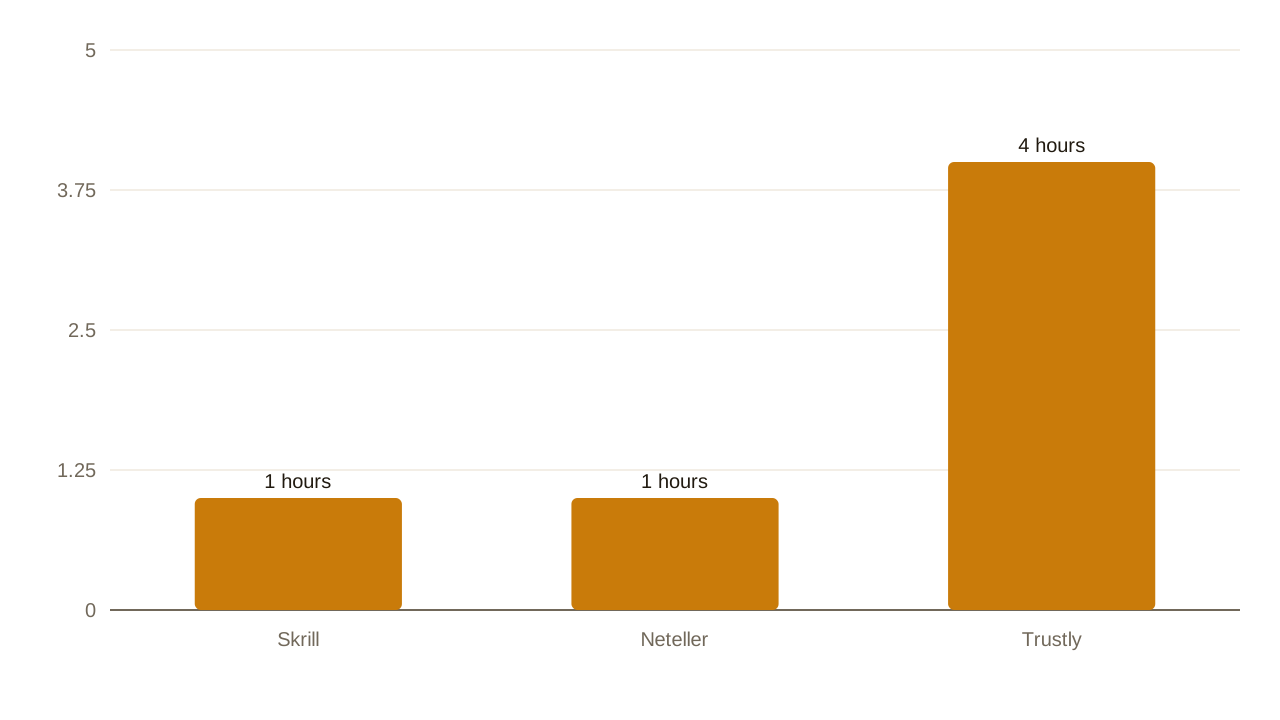
Skrill and Neteller cashouts are modelled here at about an hour, Trustly at about four, and a single flat cashout fee can cost more than the house edge takes on a small plan. This guide prices all three rails end to end: where each one appears, what each one costs, and which offers quietly refuse the wallets at the door.
The board on this page is an editorial comparison, arranged so the columns read across rather than down a single line. Terms in this market move often, so read the board as a starting map and verify the live offer on the operator's own page before any money moves.
Casino welcome bonus 805% up to €6,400 + 280 FS
Terms move often. Verify on the operator's own page.
Welcome bonus €/£5,000 + 500 FS
Terms move often. Verify on the operator's own page.
Welcome pack €5,000 + 500 FS + €650 free bet
Terms move often. Verify on the operator's own page.
Welcome package 300% up to €/£1,000 + 150 FS
Terms move often. Verify on the operator's own page.
On this page
Skrill, Neteller and Trustly sit side by side on many cashier pages, and the tidy placement hides three different pieces of plumbing. Skrill and Neteller are e-wallets, prepaid accounts that hold a balance of their own, funded from a debit card or a bank transfer and then spent wherever the brand is listed. They behave so alike that cashiers usually treat them as a pair, welcoming or refusing both in the same line of terms. Trustly is not a wallet at all. It is an open-banking bridge that moves money straight between a current account and the cashier, with no balance parked anywhere in between.
That single difference drives most of what follows. A wallet balance is a second place for money to sit, with its own fee schedule, its own dormancy rules and its own temptation to leave funds behind after a session. A Trustly payment leaves nothing behind, because the money never stopped being yours at the bank. The sections ahead cover where each rail appears, what each one costs, how their withdrawal behaviour differs, and which offers accept or refuse them. The comparison is worth finishing before the first deposit, because the costs run one way: a rail chosen well charges almost nothing, and a rail chosen carelessly takes a slice of every withdrawal you make.
Availability is broad but not uniform. The wallet pair appears across most large lobbies, licensed and offshore alike, and at least one of the two is nearly always present even where its twin has been dropped. Trustly is thickest at European-founded brands, where open banking is the default way money moves, and it has become a standard listing at many British cashiers as well. Some sites carry all three. Some carry a single wallet and a bank option and stop there.
Two habits keep the picture honest. First, check the cashier’s own banking page rather than a cached review, because rail lists change without announcement, and an offshore cashier can drop a rail overnight when a processor arrangement ends. Reviews age badly here, and a page that listed a rail last quarter proves nothing about today. Second, read the deposit and withdrawal lists separately: a rail that takes deposits does not always receive payouts, and a cashier that pays out by Trustly may still route larger sums through a bank transfer.
Expect the account rules to be strict everywhere. Cashiers want the wallet or the bank account in your own name, and third-party funding is refused as a matter of course. Deposit floors drift by rail too, with ten pounds the common shape across all three, though the offshore end of the market sometimes prints a higher entry point for wallet deposits, which matters for how a bankroll gets split.
The cashier usually absorbs the deposit side, so the fee sheet that matters sits one layer back, inside the wallet or the bank. Wallet funding is cheapest by bank transfer, and topping up by card can carry a percentage charge, with the wallet’s own published schedule as the place to confirm the current rate. Currency conversion is the sleeper cost. Offshore cashiers often price their offers in euros, and a sterling wallet converts on the way in and again on the way out, each time at a margin the wallet sets rather than the cashier. Where an offer is priced in another currency, ask which side does the converting, because the rates differ and the wallet’s rate is rarely the cheaper of the two. Trustly skips that layer entirely at a British cashier, because the payment is a bank payment in pounds from start to finish.
Withdrawal pricing varies by cashier more than by rail class. Some charge a flat fee on wallet payouts, some take a small percentage, and many charge nothing at all. Trustly returns are commonly free, though a cashier can set a minimum withdrawal that differs from the wallet’s own floor. Dormancy is the quiet one. A wallet balance left idle for months can attract an inactivity charge that nibbles at funds you meant to come back for, and that charge is published in the wallet’s terms rather than the cashier’s. On a small plan, one flat fee can outweigh everything the house edge takes, which is the arithmetic a later section makes exact.
Speed is where the three separate. Once a cashier has approved a payout, the model on this page puts either wallet at about an hour and Trustly at about four, because a Trustly return has to clear through the banking system rather than move between two balances on the same network. Those are assumption bands for the rails, not recorded times, and ordinary bank handling can stretch the Trustly leg further at the edges. The chart below sets the three windows side by side.
Routing is the second difference. Cashiers follow a return-to-source habit, which sends money back to the rail that funded the deposit. Wallets make that simple, because a wallet can always receive. A Trustly return lands in the same current account that paid in. The awkward case is a deposit by a rail that cannot receive, such as a prepaid voucher, which usually forces a bank transfer after identity checks are cleared. Partial withdrawals exist at many cashiers, though where a flat fee applies per transaction, one larger return beats two small ones on cost.
Two queues sit above the rail speed. Approval is the first: a first cashout typically triggers verification, and that can add a day or more before any rail timing starts. Pending holds are the second, where a cashier keeps a withdrawal reversible for a short window before releasing it. Neither queue belongs to Skrill, Neteller or Trustly, and all three wait behind the same checks. The bands in the model describe the rail leg only, once the release has happened.
Expected loss per session £3.00.
Expected loss across 8 sessions: £24.00.
Assumptions: spin packages return 90 percent of face value before wagering; the session model treats the stated house edge as the expected share of bankroll lost per session.
The payment services themselves are legal and widely used in Britain, so the question that matters is the operator's permit. A cashier licensed by the Gambling Commission plays under UK rules, from the public register to the credit card ban. An offshore site holds no UK permit, so none of those protections follow the money, whichever rail funds it.
Once the money is credited it plays like any other deposit, but many welcome offers refuse the bonus outright when the deposit arrives by one of the big wallets. The deposit then carries no wagering at all, because there is no bonus to clear. Trustly deposits usually qualify, and only the offer's own terms settle it either way.
Most cashiers send money back to the rail that funded the deposit. If that rail cannot receive a payout, or the sum is large, the remainder travels by bank transfer once identity checks are cleared. Expect the routing to be fixed by the cashier rather than chosen by you at the payout screen, and plan the deposit rail with that in mind.
Bonus winnings often carry a conversion cap, and some cashiers cap a single payout by rail. The wallets set their own account limits and can charge inactivity fees on balances left dormant, so money left sitting can shrink over months. Read the offer's cap, the cashier's payout page and the wallet's terms as three separate documents before you rely on any of them.
Trustly suits a player who wants every pound moving straight between bank and cashier, with no wallet to fund and no balance to forget. The wallets suit a player who spreads play across several sites and values an hour-fast return more than a free bonus. Small plans make flat fees proportionally heavier, so price the fee sheet before choosing the rail.
A licence brings a public register entry, GAMSTOP self-exclusion, an approved dispute route, the credit card ban, affordability checks and independently tested games. None of that travels with an offshore offer, which is why this site prices offshore terms plainly instead of dressing them up as equivalents to the British baseline.
The cashier usually absorbs the deposit side, and the charges that bite live inside the wallet account: card top-ups, currency conversion and dormancy are the common ones. Trustly moves money as a bank payment, so there is normally no separate rail fee to price. Schedules change, so check the wallet's fee page and the cashier's banking page before moving money.
Once a cashier has approved the payout, the model on this page assumes about an hour for either wallet and a few hours for Trustly, with ordinary bank handling able to stretch the latter. Approval itself can add a day while checks run. Treat every published window as a band with assumptions attached, never as a promise.
These offers run outside the UK Gambling Commission regime. The public register, the national self-exclusion scheme, approved dispute resolution, the credit card ban and independently tested games all belong to the licensed market, and none of them follow an offer offshore. A disagreement with an offshore operator is settled with that operator under its own terms. If self-exclusion matters to you, GAMSTOP covers licensed operators only, and nothing on this page works around that.
Gambling can harm. The National Gambling Helpline is free, confidential and open around the clock on 0808 8020 133, and BeGambleAware publishes self-help tools.
Keep reading
Daily Prize Games. Independent costing of casino offers for British readers. No operator pays for a word on this page; board placement is paid for and explained on the How We Are Paid page. 2026.