Night Luck
8.2/10Casino welcome bonus 805% up to €6,400 + 280 FS
- MuchBetter · VISA · Apple Pay
- Crypto welcome 140% up to 1,600 USDT
- VIP pack 800% up to €14,500
Terms move often. Verify on the operator's own page.
Prizes costed, terms shown
18+. Wagering is risky. Only ever stake what you can afford to lose.
A 300 per cent deposit bonus turns a £20 deposit into £80 of starting balance, and that is the last friendly number on the page. Costed at the terms this part of the market usually writes, the same offer carries £2,100 of wagering, an £84 expected clearing bill and a £300 cashout ceiling, and the terms sheet decides which of those figures you actually meet.
This board is an editorial comparison of welcome offers, and it behaves like a price list rather than a contract: terms move often, and the operator's own page is the only version that counts when you deposit. Read every entry as a snapshot to verify, not a term to rely on.
Casino welcome bonus 805% up to €6,400 + 280 FS
Terms move often. Verify on the operator's own page.
Welcome bonus €/£5,000 + 500 FS
Terms move often. Verify on the operator's own page.
Welcome pack €5,000 + 500 FS + €650 free bet
Terms move often. Verify on the operator's own page.
Welcome package 300% up to €/£1,000 + 150 FS
Terms move often. Verify on the operator's own page.
On this page
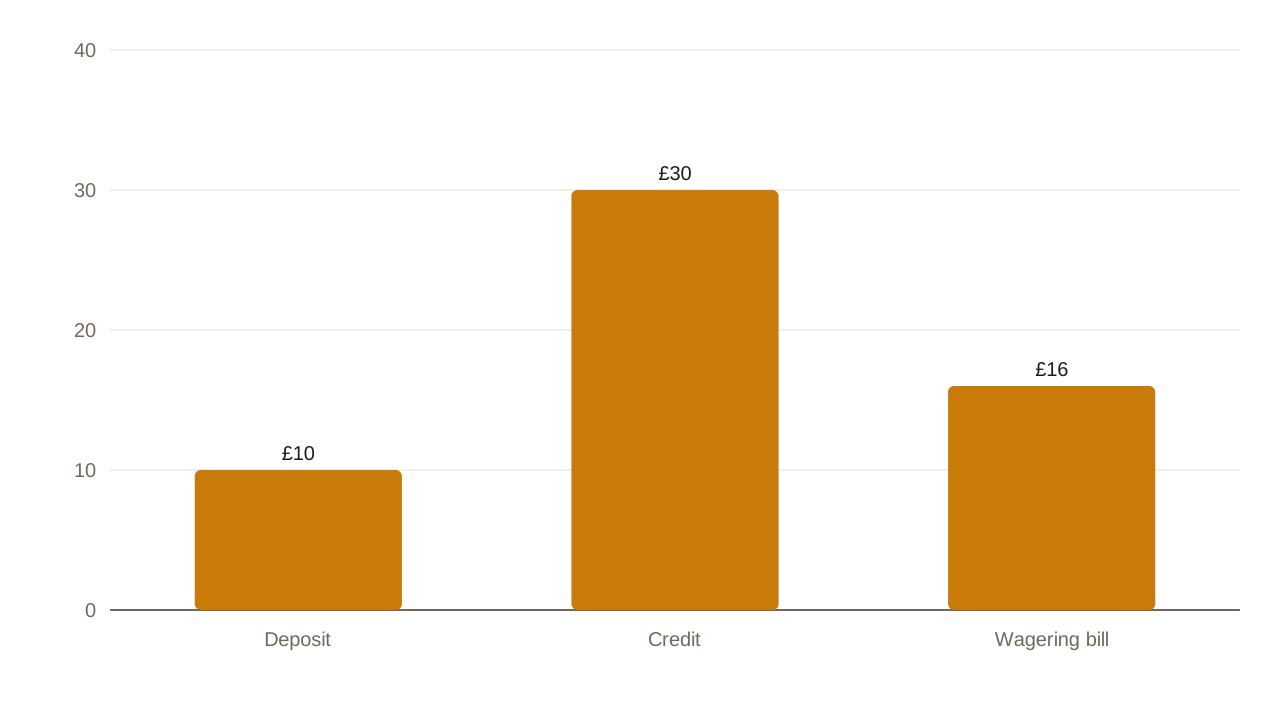
The arithmetic is simple and the banner rarely spells it out. A 300 per cent match pays three pounds of bonus credit for every pound deposited. A £10 deposit brings £30 of credit, a £20 deposit brings £60, and a £50 deposit brings £150. Your own money sits underneath the credit, so the starting balance lands at four times the deposit: £80 from £20, £200 from £50. The credit lands as bonus funds in most cases, occasionally split with a batch of spins, and the difference shows up later on the same sheet.
That rate multiplies your stake, not the operator’s money. The headline looks generous precisely because it scales with whatever you were prepared to put in, which is why the same offer reads as modest at £10 and dramatic at £100. The rate is the whole product; everything else on the sheet is a condition attached to it. Read the number as a rate rather than a sum: the rate is fixed by the terms, the sum is fixed by you.
Two details usually sit beside the rate. The first is a ceiling written as “up to”, which caps the credit no matter how large the deposit grows. The second is a minimum deposit below which the match never triggers at all. Both live on the same terms sheet as the percentage, and both change the answer more than the percentage does.
Triple matches travel with small caps more often than any other welcome shape, and the gap between the two numbers is where the value goes. A headline that implies £150 of credit on a £50 deposit can carry a bonus ceiling of £60, which leaves the top of the deposit matched at nothing, or matched on a lower second stage that arrives days later. The cap is usually printed in the same sentence as the percentage, in smaller type, and it is the sentence that matters.
The second cap matters more than the first. Many sheets limit what can be withdrawn from play that began as bonus credit, commonly to a few hundred pounds. A £300 ceiling on a £60 credit is a workable ratio; a £100 ceiling on the same credit changes the character of the offer entirely, because the upside becomes fixed while the wagering bill stays open-ended.
Three lines settle it: the maximum bonus the deposit can earn, the maximum conversion or cashout the credit can pay, and whether the cap binds per player or per promotion. Between them they describe the honest size of the offer, which is regularly a fraction of the number doing the advertising. None of the three hides, but none of the three advertises either.
Wagering is the multiplier’s shadow, and on a triple match the shadow is long. Credit of £60 at 35 times asks for £2,100 of qualifying play before anything derived from the bonus can be withdrawn. The working assumption on this page is 35 times, because that is what this part of the market asks; sheets run from about 20 times at the friendly end to 50 times and beyond at the far end.
The expected cost of that turnover is not the turnover itself. At a 4 per cent house edge, £2,100 of play costs about £84 on average, which is comfortably more than the £60 credit being unlocked. That is the arithmetic reason the headline rarely survives the sheet: on a triple match, the bill for releasing the credit can exceed the credit.
One sentence in the terms decides most of it: the definition of the wagering base. Sheets that wager the bonus alone set the bill at £2,100; sheets that wager deposit plus bonus set it at £2,800 on the same deposit. A single phrase moves the figure by a third, so it is worth finding before the deposit rather than after.
Not every pound of play counts the same. Slots usually contribute 100 per cent, so £10 of spins clears £10 of the requirement. Table games often contribute 10 per cent or nothing, and live dealer tables are commonly excluded altogether. An offer that looks clearable in an evening on slots can be arithmetically out of reach on roulette, on the same balance, under the same headline.
Maximum bet rules do the rest. While wagering is active, most sheets cap a single spin or hand at £2 to £5, and a breach can void the winnings rather than just the bonus. The cap exists to stop the credit converting in a handful of oversized bets, and it applies automatically, without warning. The limit is stated as a maximum stake, not a maximum loss, so a session of small bets inside it is exactly what the sheet contemplates.
The practical reading is that a triple match is a slots offer in practice, whatever the front page shows. If the play in question is tables or live games, the credit clears slowly or never, and the wagering clock, usually 7 to 30 days, expires first. Contribution tables sit in the middle of the terms, and they are regularly the difference between a workable offer and a decorative one.
The sheet below stages one offer end to end at the terms assumed across this page: a £20 deposit, a 300 per cent match, 35 times wagering on the credit and a £300 cashout ceiling. Every number on this page comes from the same model, so the table, the chart and the calculator tell one story rather than three.
| Line | Amount | Basis |
|---|---|---|
| Deposit | £20 | one card payment |
| Bonus credit | £60 | triple the deposit |
| Starting balance | £80 | deposit plus credit |
| Wagering required | £2,100 | 35 times the credit |
| Expected clearing cost | £84 | 4 per cent edge on the turnover |
| Cashout ceiling | £300 | cap on bonus-derived winnings |
Two lines carry the page. The expected clearing cost is an average over the wagering, not a fee and not a prediction; individual sessions land above and below it, and the spread around the average widens with the volatility of the games played. The ceiling is the line that bounds the outcome, and it binds no matter how far the balance climbs before the wagering finishes. Change any input and every other line moves with it, which is the point of running a model at all.
Bonus credit awarded £30.00.
Wagering to clear £1,600.00 at 40 times.
Turnover per pound deposited 160 times.
Assumptions: spin packages return 90 percent of face value before wagering; the session model treats the stated house edge as the expected share of bankroll lost per session.
Sites offering them fall into two groups. Operators holding a UKGC licence may run them under British rules, and the public register confirms who holds one. Offshore sites serving Britain without a UK licence operate outside that scheme: they are not run by a British regulator, so the register, GAMSTOP and the approved dispute route do not apply to them. Checking the register before a deposit takes minutes.
At the terms this part of the market usually writes, 35 times the credit. A £60 credit therefore asks for £2,100 of qualifying play before bonus-derived winnings can be withdrawn, and sheets across the market run from 20 to 50 times. Check whether the multiplier applies to the bonus alone or to deposit plus bonus, because the second reading raises the bill by a third on the same deposit.
No, not as it stands. The credit is play balance locked to wagering, and it usually disappears if a withdrawal is requested before the wagering clears, taking any winnings attached to it with it. What becomes withdrawable is whatever the balance holds once the requirement is met, and even then a cashout ceiling can limit the amount. The terms sheet names both rules in plain language.
Debit cards are the default everywhere, and e-wallets, prepaid vouchers and bank transfer are widely accepted. Offshore cashiers commonly add crypto rails, which move quickly and carry their own price risk on volatile coins. One recurring trap deserves a flag: some sheets exclude certain e-wallets from bonus eligibility, so a deposit that qualifies for the match on one rail can miss it on another. The eligible-rail list sits in the terms.
Usually both. A maximum bonus limits the credit a deposit can earn, a maximum conversion or cashout limits what play made with the credit can pay, and the wagering carries a deadline, commonly 7 to 30 days from the day the credit lands. Miss the deadline and the remaining credit and winnings are typically forfeit. The three numbers together, not the headline percentage, decide what the offer is worth.
No. Once a deposit reaches the ceiling, extra money either matches at nothing, matches on a lower second tier or sits outside the promotion entirely. On a capped triple match the efficient deposit is the one that fills the cap exactly, and anything above it is a full-price deposit. The terms sheet states the ceiling, so the efficient figure can be worked out before any money moves.
Readers who would make the deposit anyway, who play slots at stakes under the maximum-bet line, and who are comfortable treating the credit as extended play rather than as pending cash. The wagering bill and the cashout ceiling do the deciding: if both read as acceptable after costing, the offer can make sense on its own terms; if either reads badly, the headline percentage is decoration.
A casino licensed by the Gambling Commission. Welcome offers there carry lower headline rates, usually a 100 per cent match or a spins package, with wagering stated in plain numbers and cashout caps that are rare. In exchange, the register verifies the operator, GAMSTOP covers self-exclusion, the credit card ban holds, affordability checks run and an approved dispute route exists. The trade is a smaller headline for a firmer frame.
These offers run outside the UK Gambling Commission regime. The public register, the national self-exclusion scheme, approved dispute resolution, the credit card ban and independently tested games all belong to the licensed market, and none of them follow an offer offshore. A disagreement with an offshore operator is settled with that operator under its own terms. If self-exclusion matters to you, GAMSTOP covers licensed operators only, and nothing on this page works around that.
Gambling can harm. The National Gambling Helpline is free, confidential and open around the clock on 0808 8020 133, and BeGambleAware publishes self-help tools.
Keep reading
Daily Prize Games. Independent costing of casino offers for British readers. No operator pays for a word on this page; board placement is paid for and explained on the How We Are Paid page. 2026.