Night Luck
8.2/10Casino welcome bonus 805% up to €6,400 + 280 FS
- MuchBetter · VISA · Apple Pay
- Crypto welcome 140% up to 1,600 USDT
- VIP pack 800% up to €14,500
Terms move often. Verify on the operator's own page.
Prizes costed, terms shown
18+. Wagering is risky. Only ever stake what you can afford to lose.
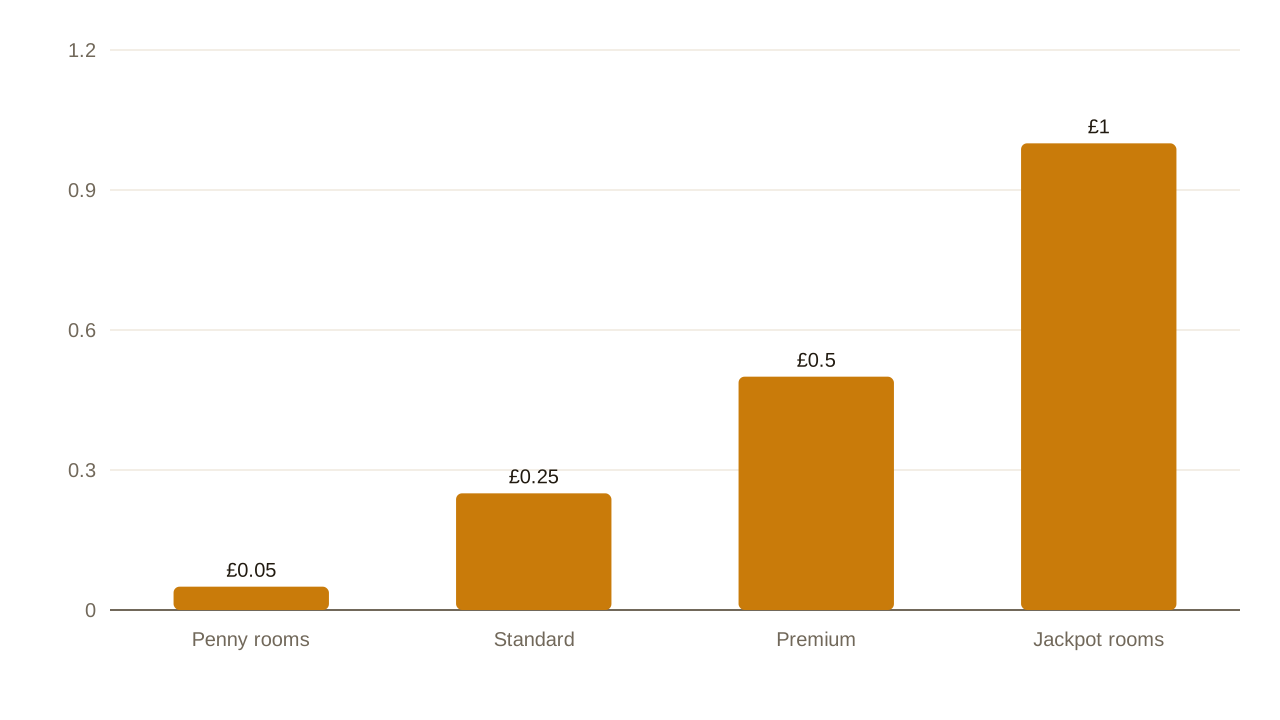
Ticket prices in online bingo run from 5p in the penny rooms to £1 in the jackpot rooms, and the rake behind the price decides what an evening actually costs. This page prices the four classes, models a £30 bankroll across six sessions at a 4 per cent edge, and reads the terms that move the maths.
The board is an editorial comparison of rooms and their current terms, compiled for this page. Offers in this part of the market move often, so treat every line as a prompt to verify the detail on the operator's own page before you deposit.
Casino welcome bonus 805% up to €6,400 + 280 FS
Terms move often. Verify on the operator's own page.
Welcome bonus €/£5,000 + 500 FS
Terms move often. Verify on the operator's own page.
Welcome pack €5,000 + 500 FS + €650 free bet
Terms move often. Verify on the operator's own page.
Welcome package 300% up to €/£1,000 + 150 FS
Terms move often. Verify on the operator's own page.
On this page
Bingo is not priced as one product. The same game can sell a ticket for 5p in a penny room, 25p in a standard room, 50p in a premium room and £1 in a jackpot room, and the four prices buy four different shapes of evening. A penny ticket stretches a budget across hundreds of calls and suits a long, quiet session. A pound ticket buys a seat where the prize pools run larger, at the cost of holding fewer tickets for the same money.
The chart below plots the four classes on one scale, and the gap is the story: the move from penny to jackpot is a factor of twenty, not a rounding error. Price is only half of the arithmetic, though. What a ticket returns depends on how the room splits your stake between the prize pool and the room itself, and that split is the rake this guide unpicks next.
A practical rule follows from the sums. If your evening budget is £5, the room class decides whether you hold a hundred tickets, twenty, ten or five. Fewer tickets means fewer chances in the session, but the prizes behind each one run larger. Neither approach is the better bet in the abstract; they are different bets on the same game, and the rest of this page prices the difference.
Expected loss per session £1.20.
Expected loss across 6 sessions: £7.20.
Assumptions: spin packages return 90 percent of face value before wagering; the session model treats the stated house edge as the expected share of bankroll lost per session.
Bingo played on sites licensed by the Gambling Commission is legal for adults in Britain, and the commission keeps a public register of every licence holder. A room on that register operates inside the British scheme. Sites running from offshore under other regulators sit outside it, which is not the same as being illegal, but the British safeguards do not reach them. The licence labels on this page carry that distinction.
Most do, and the multiple matters more than the headline. Offers of this kind often set a lighter multiple on bingo spend than on slots, sometimes in single figures, while slots wagering can run to 30 times or more. Wagering is always published in the terms rather than on the ticket, so read it before you opt in and price it into the decision.
Licensed British rooms typically take Visa and Mastercard debit cards, PayPal and similar e-wallets, bank transfer and prepaid vouchers, with the exact list varying by room. Credit cards are banned for British gambling, so a licensed site will not accept one. Offshore rooms often advertise a longer list that can include credit cards and crypto, which is itself a signal that British rules do not apply there.
Usually, yes. Bonus funds and free tickets commonly carry expiry windows measured in days, and anything unused when the window closes is removed from the account. Some offers also cap what can be withdrawn from bonus play. Both details sit in the terms, and both can turn a generous-looking package into a modest one, so check the clock and the cap before claiming.
That is the rake question, and rooms differ widely. Part of every ticket joins the prize pool and part pays for the room, and the split is rarely published as a single figure. The model on this page assumes a 4 per cent edge, a deliberately modest assumption, and the session maths follows from it. A room returning less shifts every expected cost on this page upward.
Penny rooms suit players stretching a small budget across many sessions, where the point is time spent rather than prize size and the balance moves in small steps. Jackpot rooms suit a set-aside stake on nights when a larger swing is the aim, with fewer tickets for the same money. Most budgets hold a mix: cheap rooms for routine evenings, premium tickets as an occasional treat.
The licence brings the public register, GAMSTOP self-exclusion across every licensed site at once, approved dispute resolution when payments go wrong, affordability and identity checks, independently tested game fairness and the British credit card ban. None of that machinery follows a player into an offshore room, where terms are enforced by the operator alone. The licence column in the comparison table is the shorthand for the whole list.
Let the budget set the number rather than the room. The model on this page spreads £30 across six evenings at five £1 tickets a session, and the same logic works at any price: divide the evening budget by the ticket price and buy that many. Stop there, chat-game side buys included, because extra tickets raise the expected cost in line with the stake even when they feel free.
These offers run outside the UK Gambling Commission regime. The public register, the national self-exclusion scheme, approved dispute resolution, the credit card ban and independently tested games all belong to the licensed market, and none of them follow an offer offshore. A disagreement with an offshore operator is settled with that operator under its own terms. If self-exclusion matters to you, GAMSTOP covers licensed operators only, and nothing on this page works around that.
Gambling can harm. The National Gambling Helpline is free, confidential and open around the clock on 0808 8020 133, and BeGambleAware publishes self-help tools.
Keep reading
Daily Prize Games. Independent costing of casino offers for British readers. No operator pays for a word on this page; board placement is paid for and explained on the How We Are Paid page. 2026.