Night Luck
8.2/10Casino welcome bonus 805% up to €6,400 + 280 FS
- MuchBetter · VISA · Apple Pay
- Crypto welcome 140% up to 1,600 USDT
- VIP pack 800% up to €14,500
Terms move often. Verify on the operator's own page.
Prizes costed, terms shown
18+. Wagering is risky. Only ever stake what you can afford to lose.
A £150 bankroll staked in £3 rounds carries an expected cost of about £3.75 at the 2.5 per cent house edge this page models, and that is before the coin itself moves. The rest of the ledger is the rail itself: confirmation waits on chain, conversion fees at the exchange, and the licence gap that decides what recourse you hold if a payout stalls.
The board gathers this corner of the market into a single editorial comparison, so the coin rail can be weighed against the licensed alternative on one sheet. Terms at this end of the market move often, so treat every line as a starting point and verify the current wording on the operator's own page before you send a coin.
Casino welcome bonus 805% up to €6,400 + 280 FS
Terms move often. Verify on the operator's own page.
Welcome bonus €/£5,000 + 500 FS
Terms move often. Verify on the operator's own page.
Welcome pack €5,000 + 500 FS + €650 free bet
Terms move often. Verify on the operator's own page.
Welcome package 300% up to €/£1,000 + 150 FS
Terms move often. Verify on the operator's own page.
On this page
Every casino session has a cost, whatever rail the money travels on. The games are built with a house edge, and over enough rounds the edge takes its share. What the crypto rail adds is a second and a third cost a card player never thinks about: the price of the coin itself, which moves while you play, and the time the money spends in transit, which can run from minutes to days. This page puts all three on one sheet, in pounds, with the assumptions in the open.
The method is the site’s usual one. Model, calculate, cite; never promise. A bankroll of £150, staked in rounds of £3, carries fifty rounds of play. At a house edge of 2.5 per cent, the level offshore slot lobbies usually quote, the expected cost of those rounds is £3.75. Spread over eight sittings, that is under 50 pence a session on average, though no short series behaves like an average: the spread of outcomes around that figure is wide, and the coin can swing further in an afternoon than the edge manages in a month.
Every number here is an assumption, and each one sits beside the arithmetic it feeds. They describe offers of this kind, not any single cashier. Swap in your own figures and the sums still hold.
The sheet below stages one session series from start to finish. The bankroll is converted once, staked through once, and the expected cost is priced at the assumed edge. Each line is an assumption, and the calculator on this page carries the same figures, so changing any one of them re-runs the whole sum.
| Line of the model | Figure | What it carries |
|---|---|---|
| Starting bankroll | £150 | converted to coin once, at the day’s rate |
| Stake per round | £3 | the same stake in every round |
| Rounds staked | 50 | the bankroll turned over once |
| Sittings | 8 | six or seven rounds in each |
| House edge assumed | 2.5 per cent | a common slot level offshore |
| Expected cost of play | £3.75 | before any coin move or fee |
Two lines deserve a second look. The expected cost is not a charge that appears on a statement; it is the long-run average the edge implies, and eight sittings can land well above or below it. And the bankroll line is priced in pounds at the moment of deposit, which is the last moment the figure is entirely yours. From there the coin’s market price takes over, and that is the next section’s subject.
Expected loss per session £3.75.
Expected loss across 8 sessions: £30.00.
Assumptions: spin packages return 90 percent of face value before wagering; the session model treats the stated house edge as the expected share of bankroll lost per session.
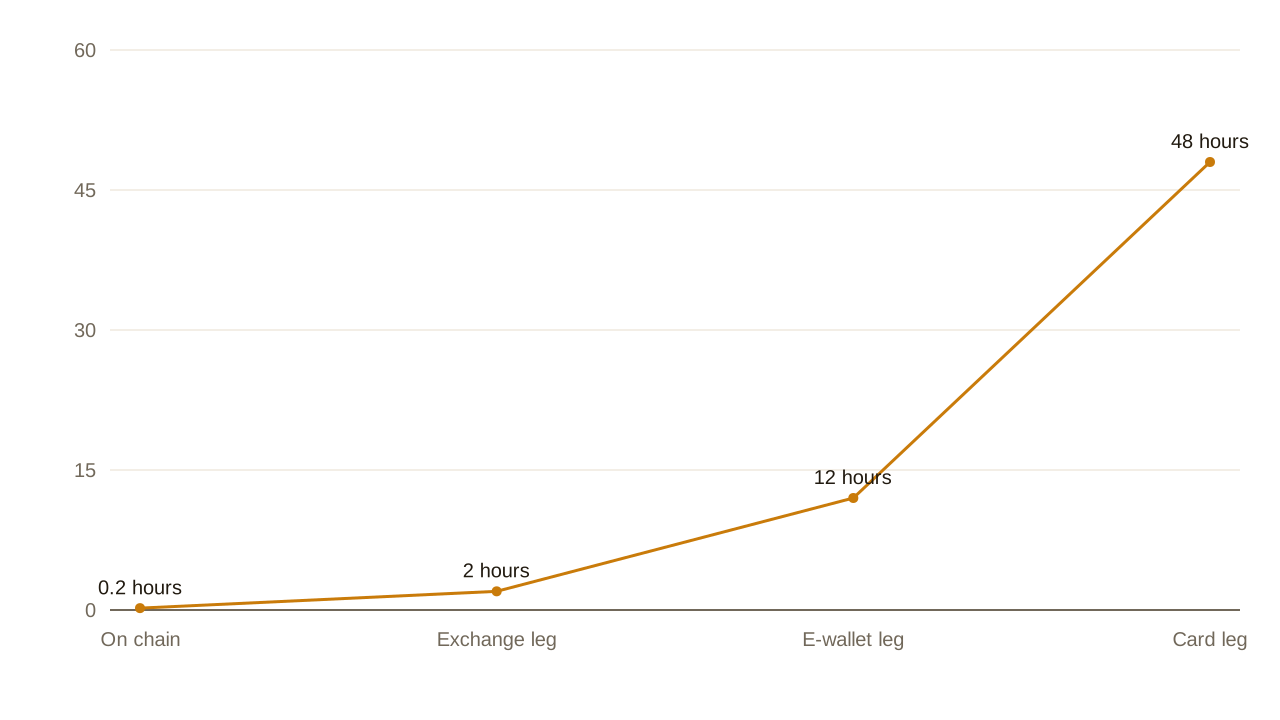
Operators serving British customers from offshore sit outside the UK Gambling Commission's scheme, so the public register, GAMSTOP self-exclusion and approved dispute resolution do not cover them. That does not make every offshore cashier badly run, but it moves the burden of trust from the regulator to the reader. Before you deposit, check what the site itself claims, look for it on the register, and treat a missing entry as the answer.
The same way it works on any match or spins offer: the bonus balance must be staked a set number of times before it converts to money you can withdraw. Crypto cashiers usually quote multipliers in the same bands as the wider offshore market, and game weighting decides how quickly each round counts. Read the contribution table alongside the headline multiplier, because a coin slot and a table game rarely contribute the same share.
A coin deposit only counts once the cashier has seen enough confirmations on the chain. At normal network conditions that takes minutes, but congestion, or a transaction fee set too low, can stretch the wait considerably. Open a block explorer, paste your transaction reference, and check the confirmation count yourself: if the chain shows the money confirmed and the balance still has not moved, contact the cashier's support with the reference ready.
Most do, and the small print matters more than the banner. Winnings from a free chip often carry a maximum cashout, matched offers can cap the size of each round while wagering runs, and the offer usually expires if the wagering is not finished inside a stated window. All three live in the terms rather than the promotion itself, so read down to them before you opt in.
Stablecoins exist for exactly this purpose. A coin pegged to a major currency holds its value while it sits in the cashier, so the session's cost reduces to the house edge and the fees. What a peg does not fix is the rest of the rail: confirmation waits, network fees, conversion spreads and the licence gap all still apply. Price stability solves one line of the ledger, not all of them.
Readers who already hold coins, already manage a wallet, and want to move money without an intermediary in the loop. It is a poor fit for anyone who wants chargebacks, pound-denominated balances and a regulator standing behind the cashier. A common compromise is to hold pounds and convert only what a single session needs, so the price risk is contained to the hours you are actually playing.
Licensed British casinos settle in pounds on debit card, bank transfer and established wallets, with payout windows that often run from a few hours to a couple of banking days. You give up the coin rail and gain the public register, GAMSTOP self-exclusion, an approved dispute route and independently tested games. For readers whose main priority is a quick, well-understood payout, the licensed rail is the simpler ledger to audit.
Expect costs at three points: the network fee each transfer pays, the trading fee when coins convert back to pounds, and the spread inside the cashier's own conversion rate. Each looks small on its own, and together they can rival the expected cost of play on a modest bankroll. Compare the cashier's quoted rate against the market rate at the same moment, and budget for fees on the way in and the way out.
These offers run outside the UK Gambling Commission regime. The public register, the national self-exclusion scheme, approved dispute resolution, the credit card ban and independently tested games all belong to the licensed market, and none of them follow an offer offshore. A disagreement with an offshore operator is settled with that operator under its own terms. If self-exclusion matters to you, GAMSTOP covers licensed operators only, and nothing on this page works around that.
Gambling can harm. The National Gambling Helpline is free, confidential and open around the clock on 0808 8020 133, and BeGambleAware publishes self-help tools.
Keep reading
Daily Prize Games. Independent costing of casino offers for British readers. No operator pays for a word on this page; board placement is paid for and explained on the How We Are Paid page. 2026.